
Rethinking workplace communication in the digital age
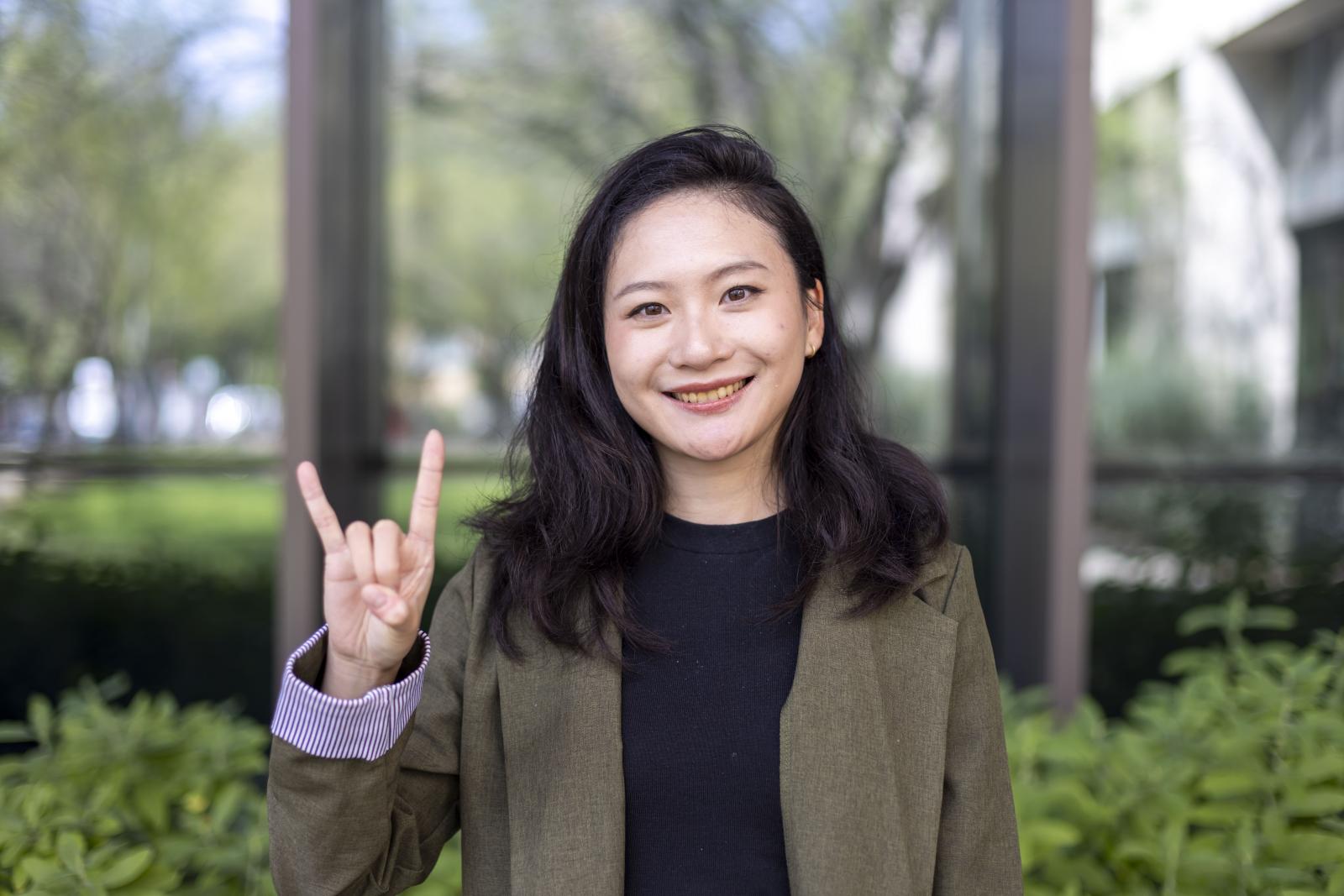
Jasmine Wu is an assistant professor of organizational communication and technology within the Department of Communication Studies at Moody College of Communication. Wu received her bachelor’s degree in information science and communication from Cornell University before going on to receive a master’s and doctoral in media, technology and society from Northwestern University. At Moody College, Wu has been able to continue her research on communication in teams and organizations, focusing on the impact that digital technologies can have on the workplace, hoping to improve employee productivity while balancing their well-being.
After personally experiencing how COVID-19 impacted how people communicate in the workplace, Wu became inspired to look into how to improve efficiency in organizations while also preventing employee burnout, especially those transitioning from remote to hybrid or in-person.
Can you explain your research to someone who may be unfamiliar with it?
I study coordination and collaboration issues in technology mediated workplaces. Nowadays, we are using many different types of technologies. These digital tools are designed for efficiency and connecting people located in different places. We have many different options, such as Slack, Microsoft Teams, Asana, Notion along with many other tools. The issue is that all of these tools constantly give us overloads of information and notifications. This can make employees feel overwhelmed, instead of efficient. My research is looking at how organization’s employees can navigate this lack of balance in the workplace.
What first piqued your interest in researching how to better workplaces for employees?
I entered my Ph.D. program in 2019. Then COVID-19 hit. I was staying in my apartment and everyone was forced to work from home. While staying home did save time on traveling to work, I felt that there was a large struggle in collaborating with my coworkers. I would feel so exhausted after having back-to-back meetings on the computer all day. I was already working with some organizations and I found that I was not alone in this issue. It was a very widespread experience across industries. This inspired me to start researching how organizations can design work so that it serves its employees well. A lot of the studies I was looking at before were very task-oriented when trying to improve people’s productivity. Now, we see that this doesn’t work. If people are too focused on getting their individual work done, it might not benefit the team as a whole. There is a tradeoff between short-term and long-term work. Employees can plan out their work for a whole week and be very productive but then face extreme burnout afterwards. I am focused on how we can make people work and be sustainably productive over a long term rather than just short periods of time. In order to do this we have to pay attention to their well-being.
How has this impacted employees' mental health?
This summer, I published a study in which my co-worker and I interviewed 700 employees in different organizations in the states, the UK and India. We found that after the pandemic, people are not making as many friends from work as before. Working becomes transactional, which has an effect on people’s well-being. Especially well-being in the workplace. This can really hurt the social aspects in companies that are required to facilitate coordination across teams. Remote work and people isolating in different places really hurt the social network that forms within the workplace.
Why are you passionate about it?
My experience is definitely the reason I am passionate about this, along with talking to so many industry leaders. These messaging tools that have Generative AI have also had an effect on the workplace. If an employee has a question, they are just going to ask an AI tool rather than messaging a co-worker. That also reduces the social aspect that so many people benefit from with their careers.
How has Moody College given you a good platform/opportunity to continue your research?
My research is very organization and community oriented. I do research projects with industry leaders, small start-ups, Fortune 100 companies, non-profits and hospitals. UT is very research-forward and connected in that front. There are many funding opportunities for employees internally and external grants. The best part about UT and Moody College though are the students. I have been teaching honors classes on social networks and workplace communications with technology for two years now. The majority of the seniors and juniors I teach have some workplace experience so they are bringing that experience into the classroom, which inspires and benefits my research. For example, last semester we were discussing how an organization could be better at generating new ideas and being creative and coming up with new solutions and students were bringing up the psychological costs that could also arrive in workplaces and how to prevent burnout. That was from their own work experience, which was great to hear as an academic.
Based on your research, what advice would you give to students/faculty to help them have a productive workplace and achieve a healthy work-life balance?
Be more intentional about where and when you communicate. By where, I mean which communication technology you message through. It is important to follow the guidelines that your supervisors set for you, but it is also important to be aware of your own work preferences and how it makes you feel. Setting boundaries is also very important. These boundaries are not just concerning actual work, but more about the work technology itself. It’s so tempting for us to be worried about work 24/7, especially now that these apps can be on our personal phones, but it’s important to take some time away. We have an instinct to reply to things immediately, even after clocking out, so that we can make a better impression, but in the long run it can do more harm than good. Always make sure to give yourself time to recover. For organizations, it is important to establish guidelines and norms on when it is acceptable to respond to messages in Teams or emails and establish set meeting times. These expectations help people protect their own time.
