“When I Talk, I Stutter” takes flight
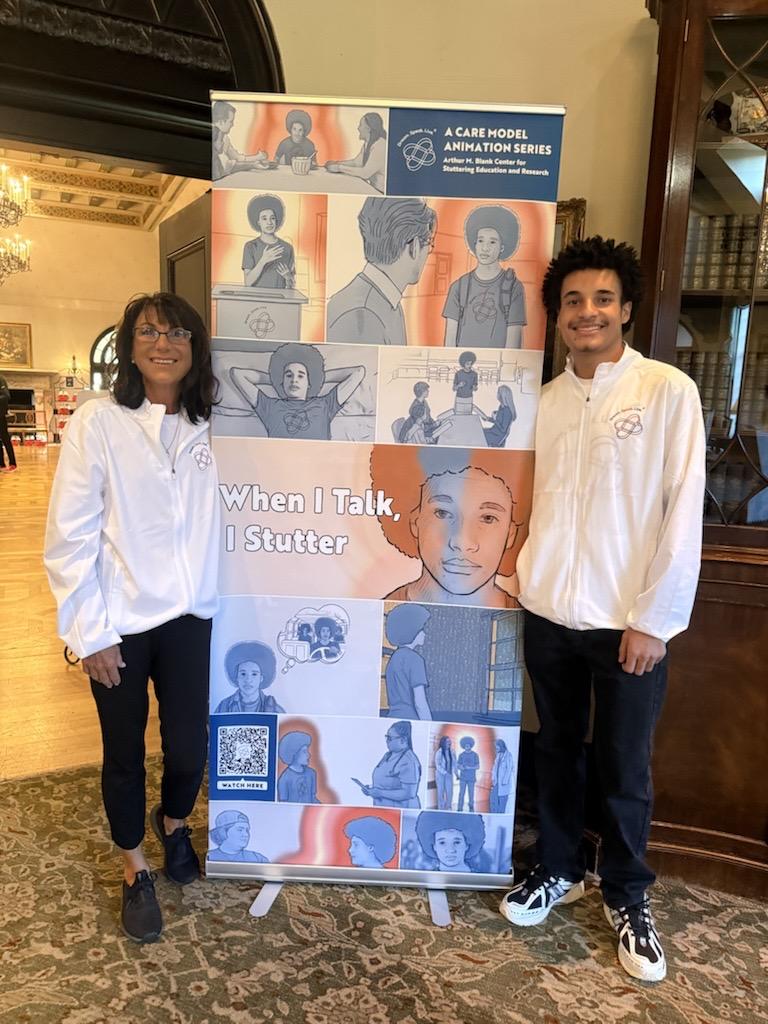
“Why doesn’t anyone understand? When they ask me to try harder and not stutter, they are basically asking me not to speak,” is a central line from “When I Talk, I Stutter,” the Arthur M. Blank Center for Stuttering Education and Research’s animated documentary series, in which Juell Reed, a former Blank Center participant turned advocate, is the lead.
The five-episode series, written by the Blank Center’s Founding and Executive Director, Dr. Courtney Byrd, draws on more than 1,000 interviews with children, teens and adults who stutter. The goal of the series is to educate the public about stuttering, reduce stigma and show the life-changing impact of the Blank Center’s “CARE” model.
CARE stands for communication, advocacy, resiliency and education. Shaped by over two decades of clinical research, the model is a distinct approach to treating stuttering. Rather than aiming to make people speak more fluently, it helps children, teens and adults communicate and connect with others, however much or little they stutter. It teaches people who stutter that their communication is not defined or limited by fluency. It also shows them how to share meaningfully about their stuttering if and when they choose, how to build the resiliency needed to face adversity and how to understand their stuttering. When they no longer feel they have to change or hide it, they are empowered to dream, speak and live their lives to the fullest.
Reed stutters naturally throughout the series, but the episodes reflect more than his own life. Each one draws on the most common lived experiences shared in those interviews, beginning with the outside world’s negative view that stuttering is something to hide or be ashamed of, then shifting to Reed’s perspective as he uses the CARE model to turn self-doubt and isolation into confidence and belonging.
Since its first publication, the series has been widely viewed on YouTube and incorporated into treatment and training sessions by speech-language pathologists, teachers and special educators worldwide. Now, two years later, the series is gaining even more traction.
Rhonda Bass is a senior flight attendant for Delta Air Lines who developed stuttering after suffering a traumatic brain injury. Based in Atlanta, she helps hire and train the airline’s new flight attendants. While taking part in the Blank Center’s CARE program, Bass watched the documentary series.
“It touched my hea- heart,” Bass said. “I shared it with oth- others.”
She then joined the Blank Center’s Pay-it-Forward program, where participants use what they have learned to create change beyond themselves.
For her Pay-it-Forward project, Bass partnered with the Blank Center and Delta’s hiring team to make the airline’s hiring processes more inclusive for those who stutter. Today, applicants have the opportunity to request accommodations for their video application process and flight attendants can openly disclose their stuttering during in-flight safety briefings.
Through that same partnership, Bass also championed the inclusion of the “When I Talk, I Stutter” series in Delta’s in-flight programming. The series began airing in October on all domestic and international flights, with closed captions in multiple languages, and will continue into 2027. The launch timing was especially meaningful, coinciding with National Disability Employment Awareness Month and International Stuttering Awareness Day.
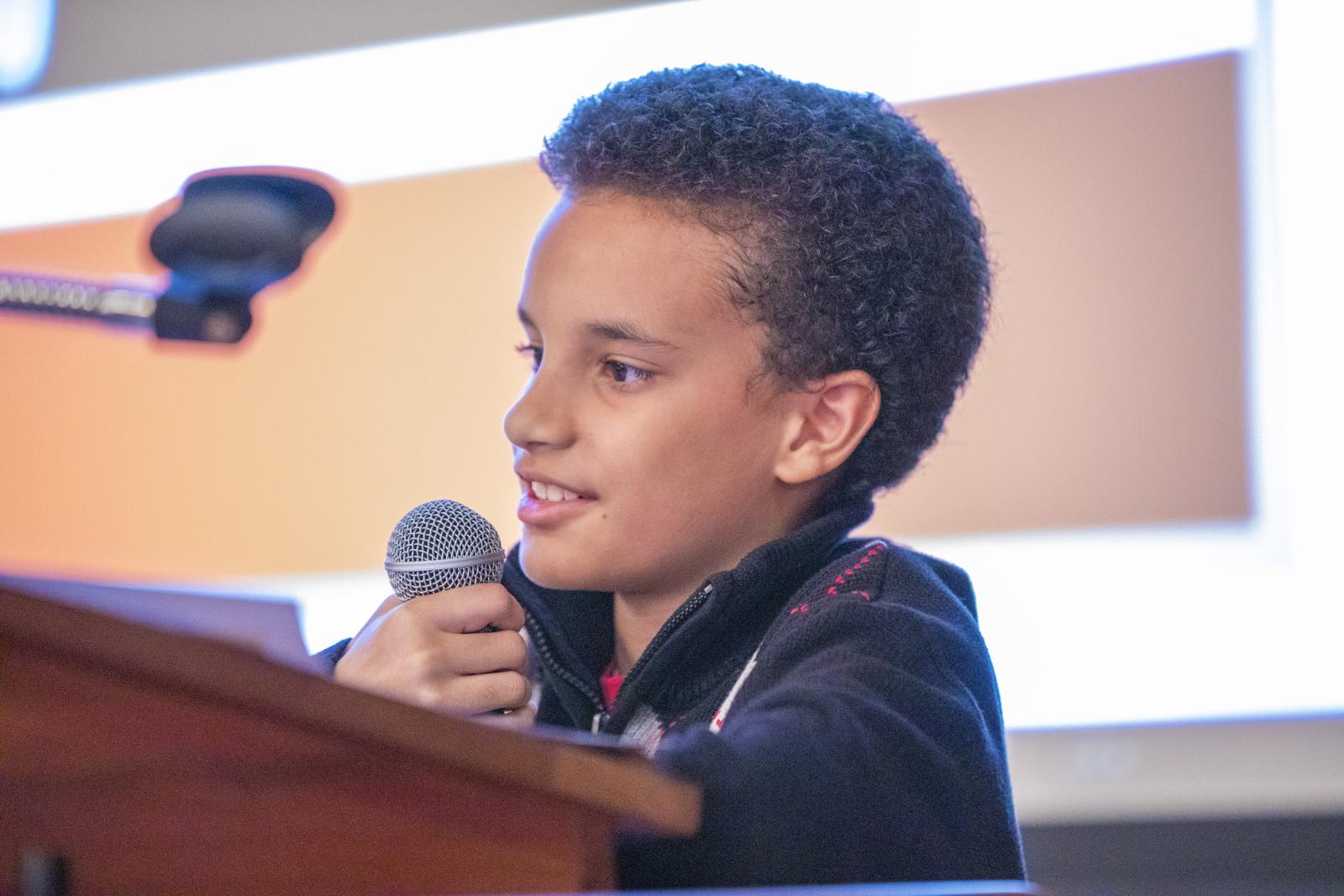
Reed, now a sophomore in college studying educational leadership, was 10 years old when he participated in the Blank Center’s CARE program. Because of the misconceptions about stuttering, others wrongly assumed that Reed had a cognitive deficit and would not be able to keep up with his peers in the classroom. Reed came to the program through his grandmother, who knew his stuttering did not reflect his intelligence. Through the Blank Center’s advocacy at his school, Reed received additional testing and was eventually placed in the Gifted and Talented program, disproving those assumptions. Reed now pays it forward through CARE, including by starring in the series.
“Dr.- Dr. Byrd helped me to see that I could achieve anything that I set my mind to, and- and my stuttering was not the problem; peo- people’s ignorance was,” Reed said.
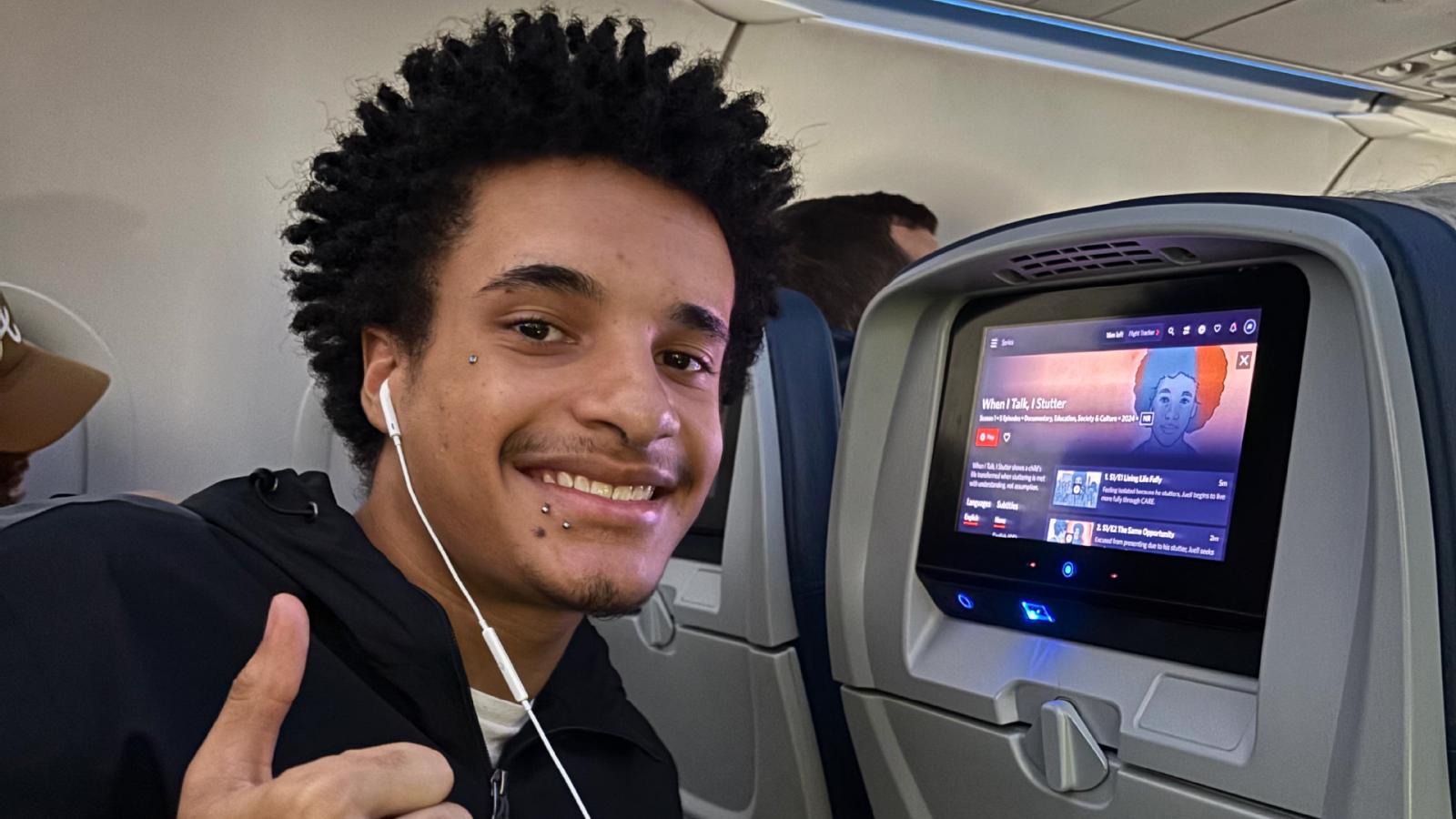
On Oct. 11, Reed flew from Austin to Atlanta to speak at the annual Dream. Speak. Live. Golf Tournament, which supports the mission of the Blank Center. Delta and the Blank Center worked together to surprise him by arranging for Bass to serve as a flight attendant on his flight. Before the plane took off, Bass shared with everyone on board the profound impact of her experience with the Blank Center, and then announced that the series was becoming part of Delta’s in-flight entertainment, with a special shout-out to the series star, Juell Reed, seated in 29C.
“Finding my way back- back meant more than re- re- returning to work- to work,” Bass told passengers. “It meant finding the co- confidence to let people hear me aga- aga- again.”
Then she turned to Reed. “Your voice and ad- ad- advocacy are- are- are taking fl- flight,” she said.
Bass then said, “Thank you to the Blank- Blank Center for helping us believe in our vo- our vo- our voices, and thank you to Delta for hearing mi- mi- mine.”
Reed and Bass had never met before that flight, and that full-circle moment has gone viral on Instagram and Facebook with over 4 million views and counting. The resounding message in the comments is that the world needs more of this, more understanding, more love and more kindness.
“I can’t even talk about it without tears coming to my eyes,” Byrd said. “Rhonda and Juell both came to us for support, and now they have gone on to support more people than we could have without them. I think what is important is that people understand that stuttering can affect anyone, regardless of gender, race, culture or where they are from. That is why the response has been so remarkable.”
She hopes the series and the responses documented through the viral moment will encourage other employers to take meaningful steps toward inclusivity.
“Delta’s response has been incredible,” Byrd said. “I believe their actions will motivate other companies to follow their lead.”
Byrd had a message for the people who have shared their experiences of stuttering with the Blank Center.
“We are never going to give up. We are going to share all that they have taught us with as many people as possible, and we do not take a second of their time for granted,” Byrd said. “I want them to see that they are inspiring others by being fully who they are, and they will all go on to change the world in ways we can’t imagine.”
Bass had a closing message for the passengers that fits everyone who reads this article.
“…please take a little time to wa- to watch the ser- ser- series, and carry that understanding wi- with you.”
Watch the series and download the free companion worksheets from the Blank Center’s website. Those interested in joining the Blank Center’s Call to Action to stop using how much a person stutters to determine who receives treatment and when it ends can contact the Blank Center via email.