
Moody College alumna Kristen Christy has turned loss into a lifeline
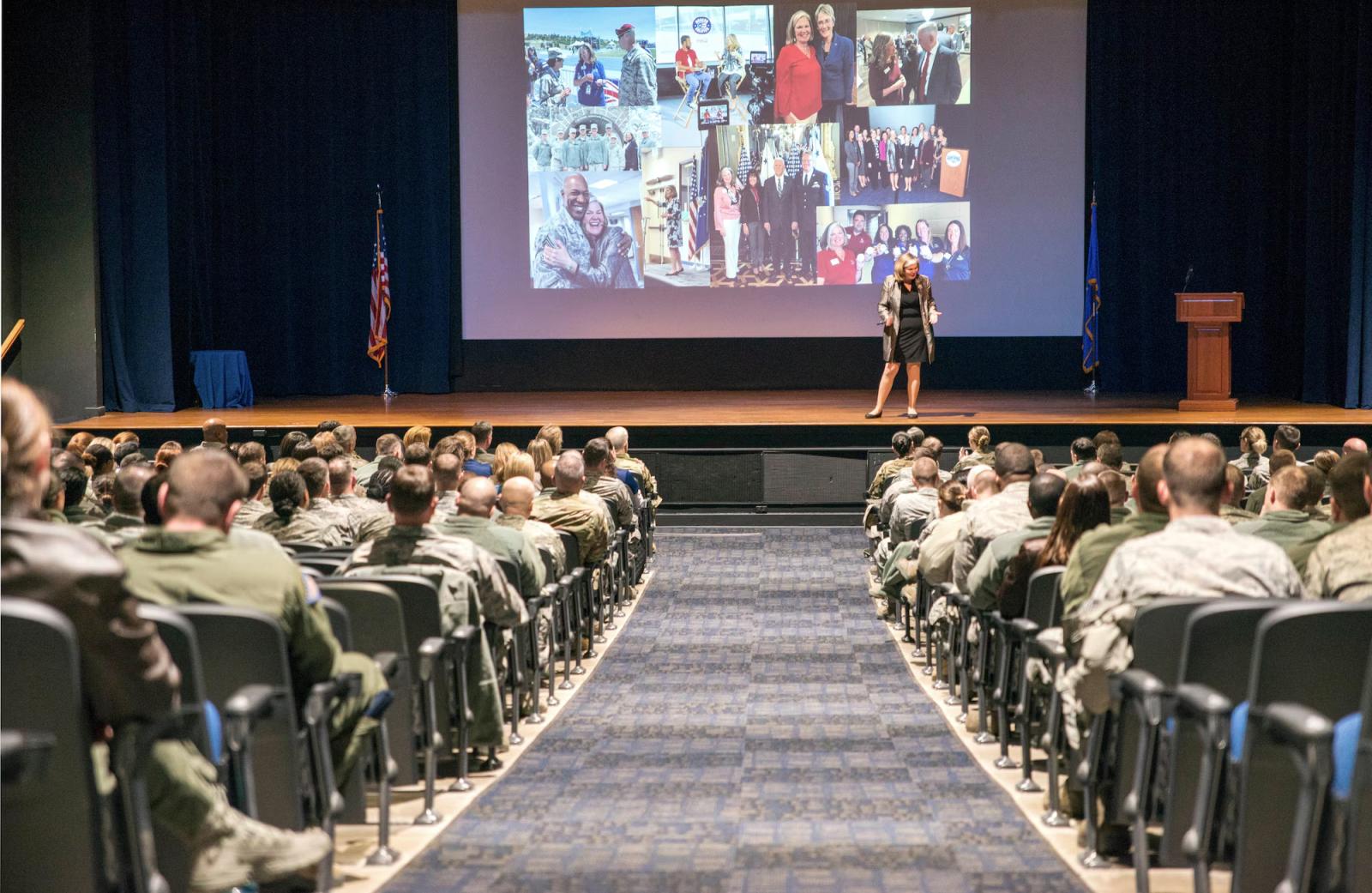
Kristen Christy’s story is deeply personal, but she never hesitates to openly share in hopes someone else can find her experience helpful, or even, lifesaving. As the co-creator of the 988 Suicide & Crisis Lifeline and an in-demand public speaker, she knows that sometimes, words, make all the difference.
Having lived throughout the world as part of an Air Force family, she’s known the value of words and understanding all her life.
“I remember as a little girl in Okinawa getting to stay up late to watch the Miss America pageant and one of the questions for one of the contestants was, ‘If you had a superpower, what would it be?’” Christy said. “And I told my mom that if I had a super power it would be to speak and understand every single language in the world because I think communication is the number one aspect of peace.”

That same little girl had dreams to play tennis and golf and eventually, she received scholarships to do so. However, those plans were put on hold when she suffered a stroke during her junior year in high school.
“So that stopped me from following those dreams but my dad being in the Air Force, even though we lived in Germany at the time, kept his Texas residency,” Christy said. “So, I qualified as an in-state resident and, even though my scholarships for tennis and golf went away, I received a full scholarship from the Texas Rehabilitation Commission.”
From Germany, Christy made her way to The University of Texas at Austin.
“I didn’t know a soul,” she said. “It was 1985 and I remember being in freshman orientation in this huge auditorium, but I locked eyes with someone across the room and recognized them as a classmate of mine from Okinawa from seventh grade. I went up to him afterward and he told me about the Air Force ROTC/Silver Wings, and it was there I found my community.”
Despite initially wanting to be an accountant, Christy says that it was divine intervention that she went into communication.
“Communication creates connection which creates community which creates belonging,” she said.
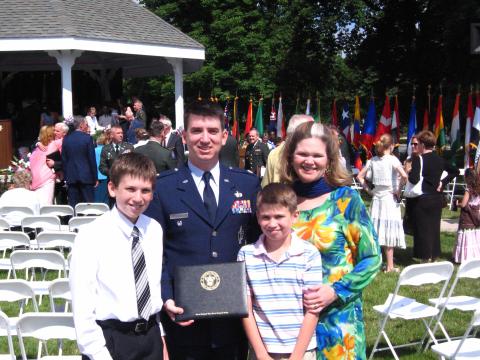
After college, Christy and her husband, Lt. Colonel Don Christy, landed in Colorado Springs, Colorado. But everything changed after Don was deployed. Christy says that once he came home, Don was different. It wasn’t long after that he died by suicide. Since then, her sons have also attempted suicide and one of them has now been missing for years.
For quite some time, Christy carried the weight of these moments. She says that even though the pain from these experiences hasn’t ended, it has eased, especially through the help of therapy and her community.
So, she turned tragedy into action.
“Two years after Don passed away and two days after my son’s attempt, at 3 a.m. it hit me,” Christy said. “We have 911 for a medical emergency so why don’t we have a three-digit number for a mental health emergency?I became obsessed with the notion of doing something about it.”
That late-night vision, and 12 years of advocacy, helped lead to 988, the three-digit Suicide & Crisis Lifeline that launched nationally in July 2022. Today, people across the United States can call or text 988, or use online chat, to reach trained crisis counselors 24 hours a day. The line connects people to a national network of local crisis centers, pairing immediate support with community-based care. The number is not just for those in crisis, but also for anyone who’s trying to help another who may be experiencing a difficult time.
The Lifeline has now gone global and is available in the US, Canada and overseas U.S. military installations. In the last four years, 988 has answered more than 23.3 million calls, texts, and chats.
Christy’s lived experiences became central to her work as a public speaker and resilience trainer. She says that having this as her career sets her soul on fire.
“A career is what you’re paid for, a calling is what you’re made for, and I get to combine the two,” she said.
Christy’s journey from loss to advocacy shows what can happen when a communicator uses her voice not simply to tell a story, but to potentially rewrite an ending for someone else.
“Life seems hopeless sometimes, but I’m here to tell you that I’m not in a fetal position – I’m standing up tall because hope is not canceled.”
Christy uses a lot of acronyms in her speaking but perhaps the most powerful is simple and memorable.
“HOPE. Hold on, pain eases.”
Those interested can hear more of Christy’s story and learn about her work via her website.

