
“When I Talk, I Stutter” film reaches SXSW EDU audiences
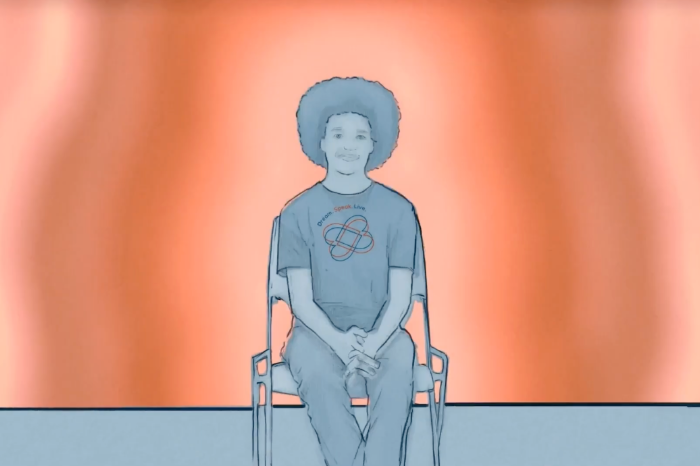
An animated doctor tells Juell Reed, a student, that he doesn’t have to be nervous after he stutters while answering her question about what sports he plays. Confident, Reed explains that he’s not nervous and that, as a person who stutters, he could be completely relaxed and still stutter when he speaks: that stuttering is neurophysiological.
This latter scene in “When I Talk, I Stutter” is based on Reed’s lived experience as a young man who stutters and recipient of the Blank Center CARE ModelTM, the Arthur M. Blank Center for Stuttering Education and Research’s approach that aims to uplift and empower children, teens and adults who stutter.
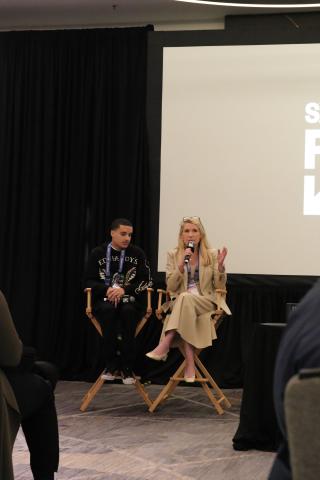
This year, audiences at the SXSW EDU conference and festival were able to watch a screening of “When I Talk, I Stutter” during its short film program. Reed, alongside Dr. Courtney Byrd, founder and executive director of the Blank Center, took part in a Q&A following the screening.
“Participating in SXSW EDU is a milestone for the Blank Center, marking a pivotal moment in our mission to end the pervasive stigmatization of stuttering,” Byrd said. “By narratively translating the CARE Model's decades of clinical evidence into an accessible, artistic format, ‘When I Talk, I Stutter’ amplifies our efforts to increase global understanding. It ensures that authentic communication is not just something we advocate for, but something we celebrate on a mainstream stage."
Byrd says there is currently a pilot, along with four other episodes, of “When I Talk, I Stutter” on the Blank Center’s YouTube channel.
“When individuals who stutter are asked which of the episodes they relate to, the resounding message is: 'all of it,'” Byrd said. “I wrote these scripts based on years of conducting interviews and listening to the lived experiences of people who stutter worldwide. These aren't just 'inspired' by the community; they are a direct reflection of their journeys and the adversity they face regardless of where they live, and I am determined to change that experience to a positive one through education.”
Because the series is animated, Byrd says this helps to make them more relatable to children, educators, caregivers and the public.
“It demonstrates visually that stuttering is a way of talking and is not a sign of nervousness or lack of intelligence,” Byrd said. “The fact that volunteers have already translated this message into more than 15 languages proves that while the stigma is universal, the life-changing impact of the CARE Model is, too. Guided by the hearts of the global stuttering community, we will keep telling their stories with the aim of ensuring that one day they are no longer anchored to stigma.”
Interested viewers can watch “When I Talk, I Stutter” on YouTube and learn more about the Blank Center’s impact online.

